
They told me to be more strategic. I had no idea what that meant.
Three words. Career-defining. Completely useless.

“Be more strategic.”
If you’ve heard that feedback and walked away feeling confused, a little stung, and completely unsure what to do next, you’re not alone. And you’re not the problem.

The feedback is broken
Most feedback tells you something useful. “Your slides were too dense.” “You lost the room when you got into the detail.” That’s feedback you can act on. But “be more strategic” doesn't give you anything. It sounds important, it carries weight, and it lands like a verdict, but it’s not a development plan. It’s a signal that the person giving it couldn’t articulate what they actually wanted from you.
That doesn’t make the feedback harmless. It just means the burden of decoding it has been quietly handed to you.
And that’s where things get unfair.
What’s Really Being Said
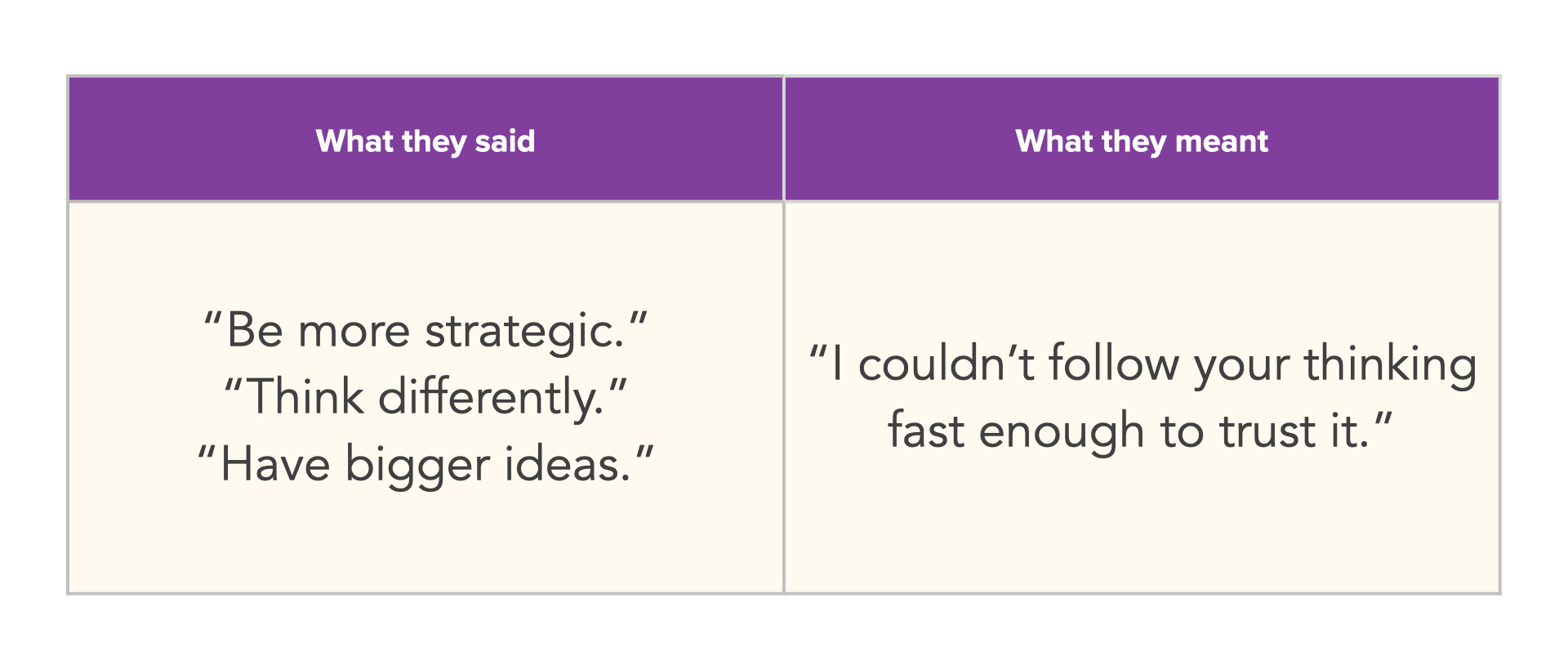
Here’s what “be more strategic” almost always means, translated:
Not “think differently.” Not “have bigger ideas.” It means: I couldn’t follow your thinking quickly enough to trust it.
That’s a framing problem, not a strategy problem.
Neurodiverse leaders hear this feedback more than most. Often after a meeting where our analysis was sound, our preparation thorough, and our recommendation genuinely right. But the framing didn’t land. The room got lost in the detail. The decision got deferred.
The thinking was there. The translation wasn’t.
The Leader Who Cracked It
A product director we worked with, let’s call her Priya, had received this feedback multiple times. She was given it while in the same role, but from two different managers, with the same verdict: not strategic enough.
She was one of the most rigorous thinkers in her organisation. She could hold more variables in her head than anyone in the room. She was almost always right.
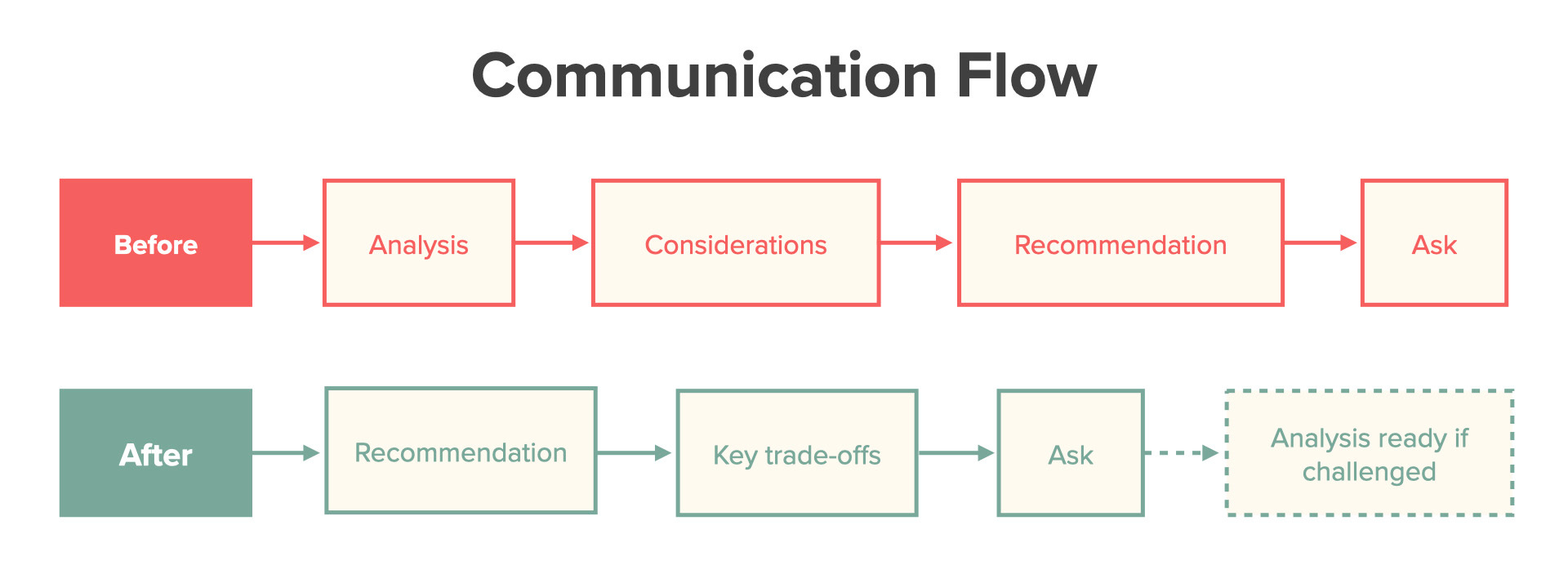
But in senior meetings, she led with her workings. She showed the analysis before the answer. She walked people through every consideration before landing on a recommendation. To her, that was thoroughness; to the room, it felt like uncertainty.
One shift changed everything. She started leading with the decision, not the journey. She’d open with: “I’m recommending we do X. Here’s the trade-off you need to know, and here’s what I need from you today.” The detail was still there, ready if challenged. But the room got what it needed first.
Within six months, the feedback had positively flipped. Same thinker. Different framing.
The Practical Shift
Stop presenting information. Start presenting choices.
Every update, every meeting, every slide deck, ask yourself: what decision am I making easier for this room?
If you can’t answer that, you’re not ready to present yet.
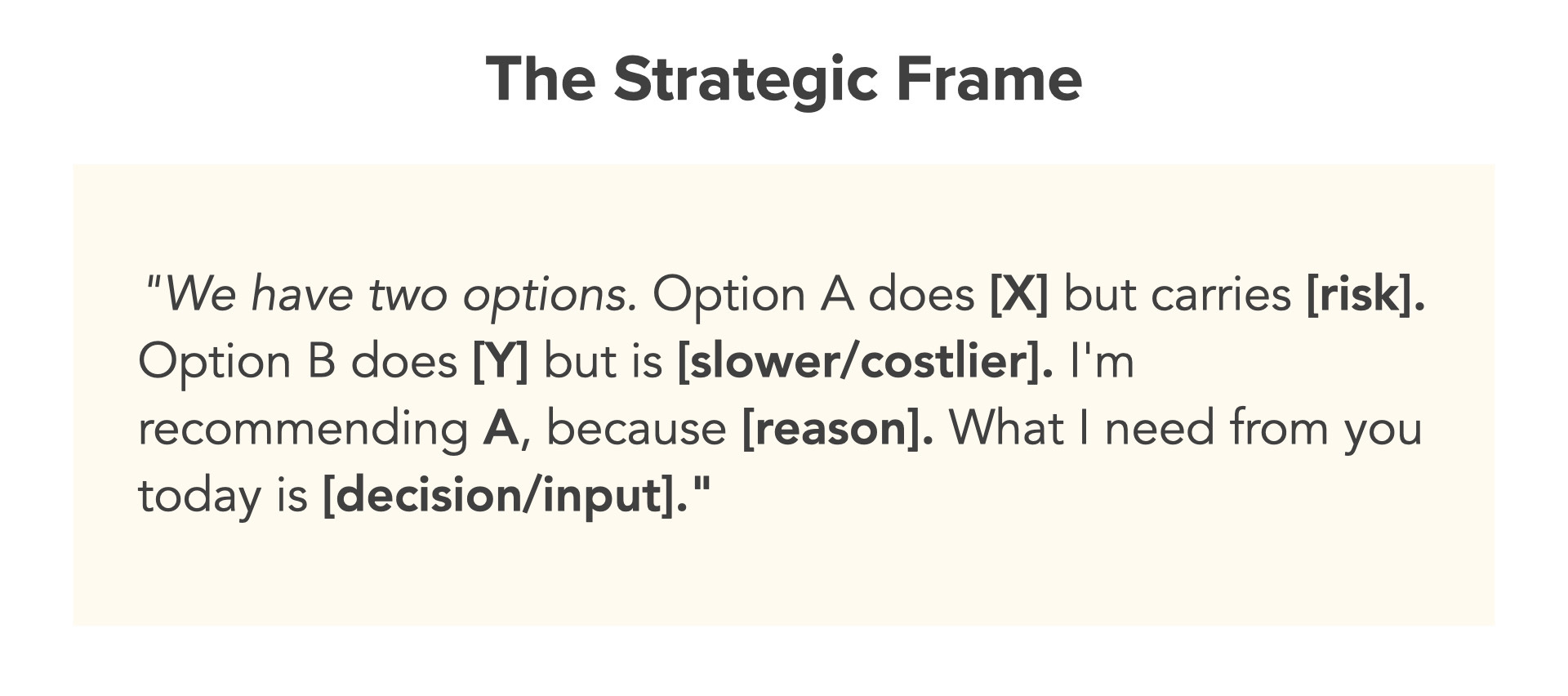
Frame it like this: “We have two options. Option A gets us to market faster but carries this risk. Option B is safer but slower. I’m recommending A, and here’s why.” That’s strategic communication. Not because it sounds more executive, but because it reduces the cognitive load on those making the decision.
The Objection Worth Naming
You might be thinking: Why should I have to change? My thinking is solid. The logic holds. Why is it on me to simplify something that genuinely is complex?
That’s a fair question. And the honest answer is: being right and being understood are two different skills. Both matter. But only one of them gets you promoted.
The goal isn’t to dumb down your thinking. It’s to make it legible without losing the depth. That’s not a compromise on your intelligence. It’s the most advanced communication skill there is. It is far harder to say less and be clearly concise.
What to Take Away
“Be more strategic” is a symptom, not a diagnosis. It usually means your thinking isn’t translating into the room fast enough for people to trust it.
The gap isn’t in your strategy. It’s between how you think and how you’re being received. And that gap is completely closable.
You don’t need to think differently. You need a system for translating what’s already in your head into language that moves rooms, earns buy-in, and builds the kind of influence that sticks.
Ready to Build That System?
The CALM Masterclass is built for leaders who think deeply and want their ideas to land with the authority they deserve. If you’re ready to turn your thinking into influence, without performing a version of yourself that isn’t real, this is where that starts.