
The meeting replay: why you always know exactly what you should have said, two hours too late
The meeting replay is costing you more than you think

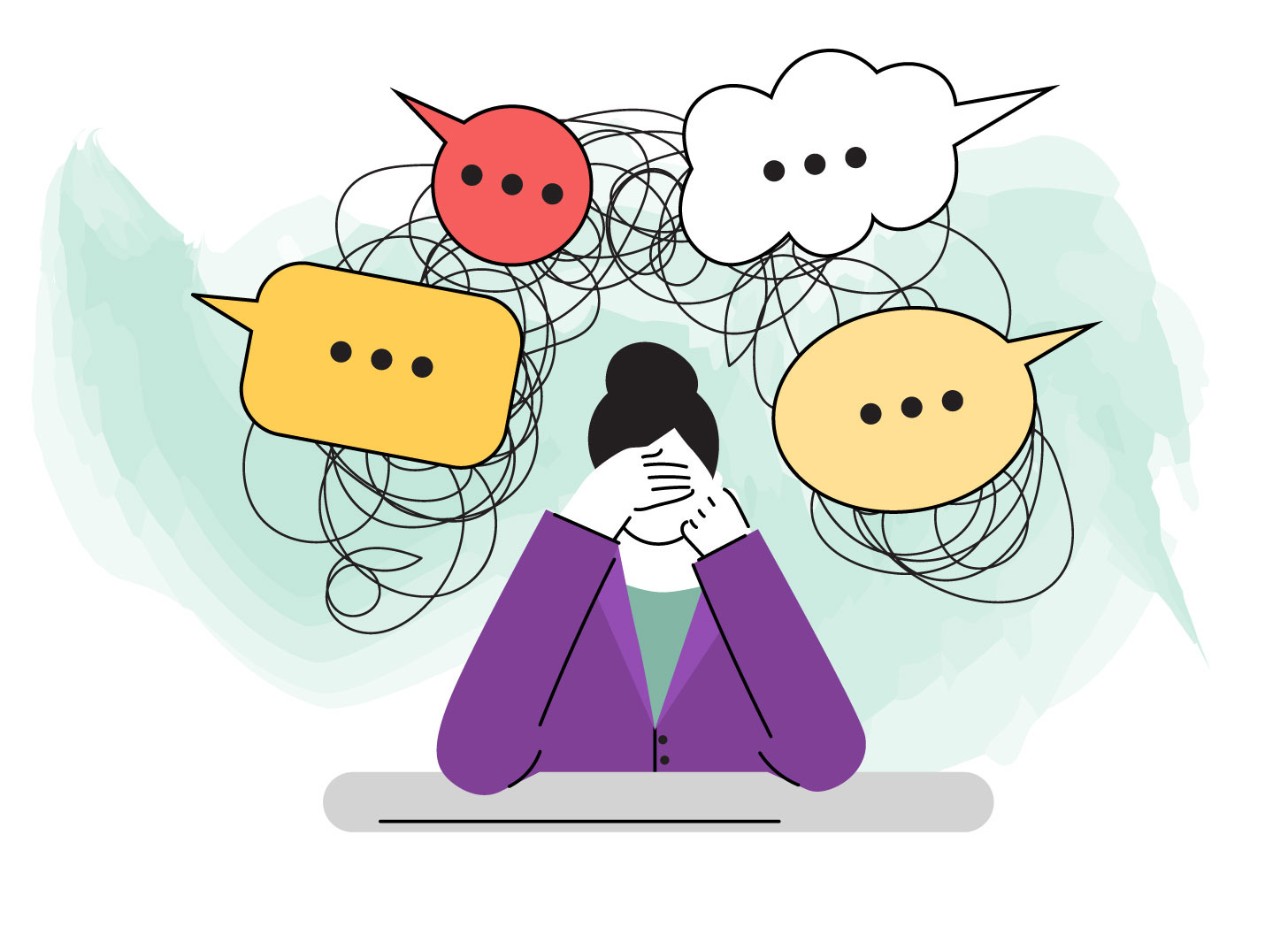
The meeting is over, and you’re back at your desk. You make a coffee, sit down, and stare at the wall for a moment.
And then it happens.
The perfect response arrives. Fully formed and effortlessly clear. The sharp reframe you could have offered when the CEO raised that concern. The question that would have shifted the whole direction of the conversation. The way to land the idea that somehow got tangled up in the detail and lost in the noise.
It’s obvious now. Completely, frustratingly obvious.
But it’s two hours too late, and the decision has already been made.
It’s not a confidence problem
If this sounds all too familiar, here’s the first thing to know: this is not a confidence problem.
It’s not nerves. It’s not a sign you’re not cut out for high-stakes rooms. It’s not something that will magically fix itself if you just believe in yourself a bit more.
It’s a processing problem. If you’re the kind of leader who thinks in patterns, who connects ideas across different contexts, who needs a moment to organise your thoughts before you speak, it’s almost inevitable. It’s not a flaw. It’s just how your mind works. The difference is whether you have a system that works with it.
What’s actually happening in the room
So, let’s see what’s actually happening inside that meeting room.
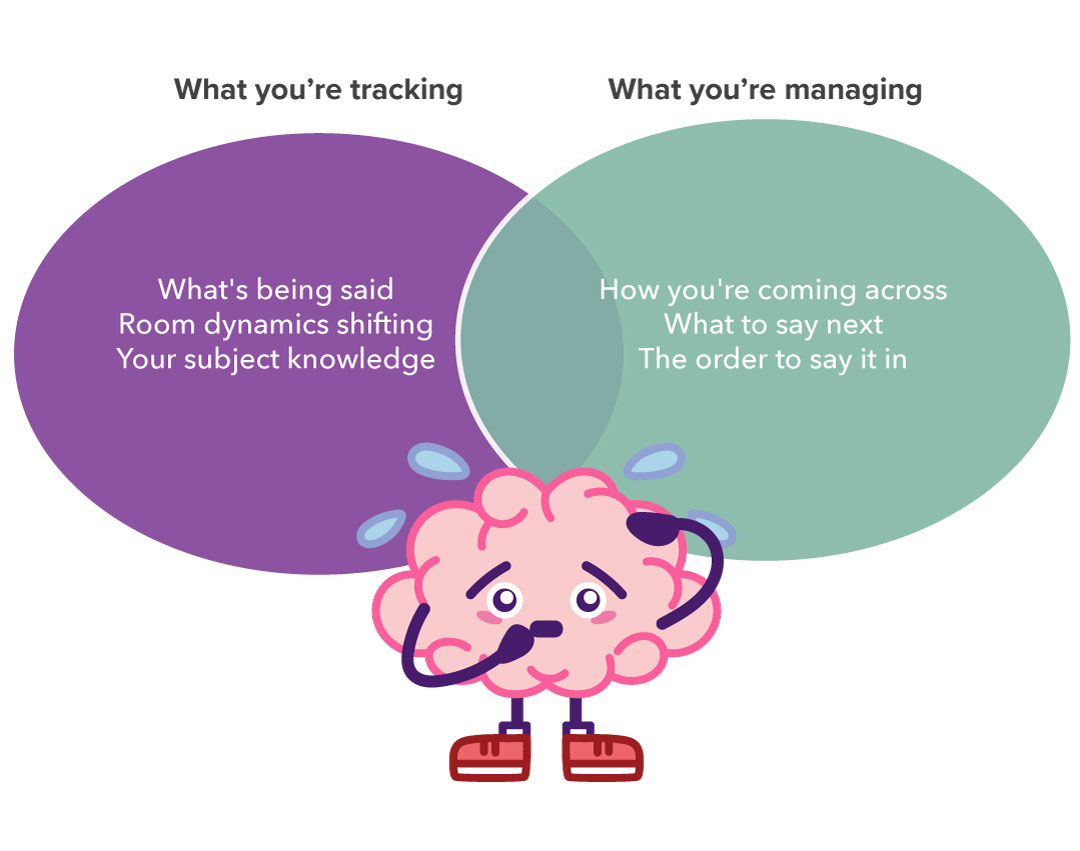
You walk in with your subject knowledge fully loaded. You know this topic better than anyone. But without a communication design, you’re asking your brain to do too many things at once. Process what’s being said, track the shifting dynamics in the room, manage how you’re coming across, and simultaneously decide what to say, how to say it, and in what order.
That’s a lot to hold. It’s called cognitive overload, and under that kind of pressure, the thinking that would genuinely impress the room stays locked inside, while a less considered version of you fills the silence.
No wonder the best answer arrives two hours later.
The three things no one teaches you to decide beforehand
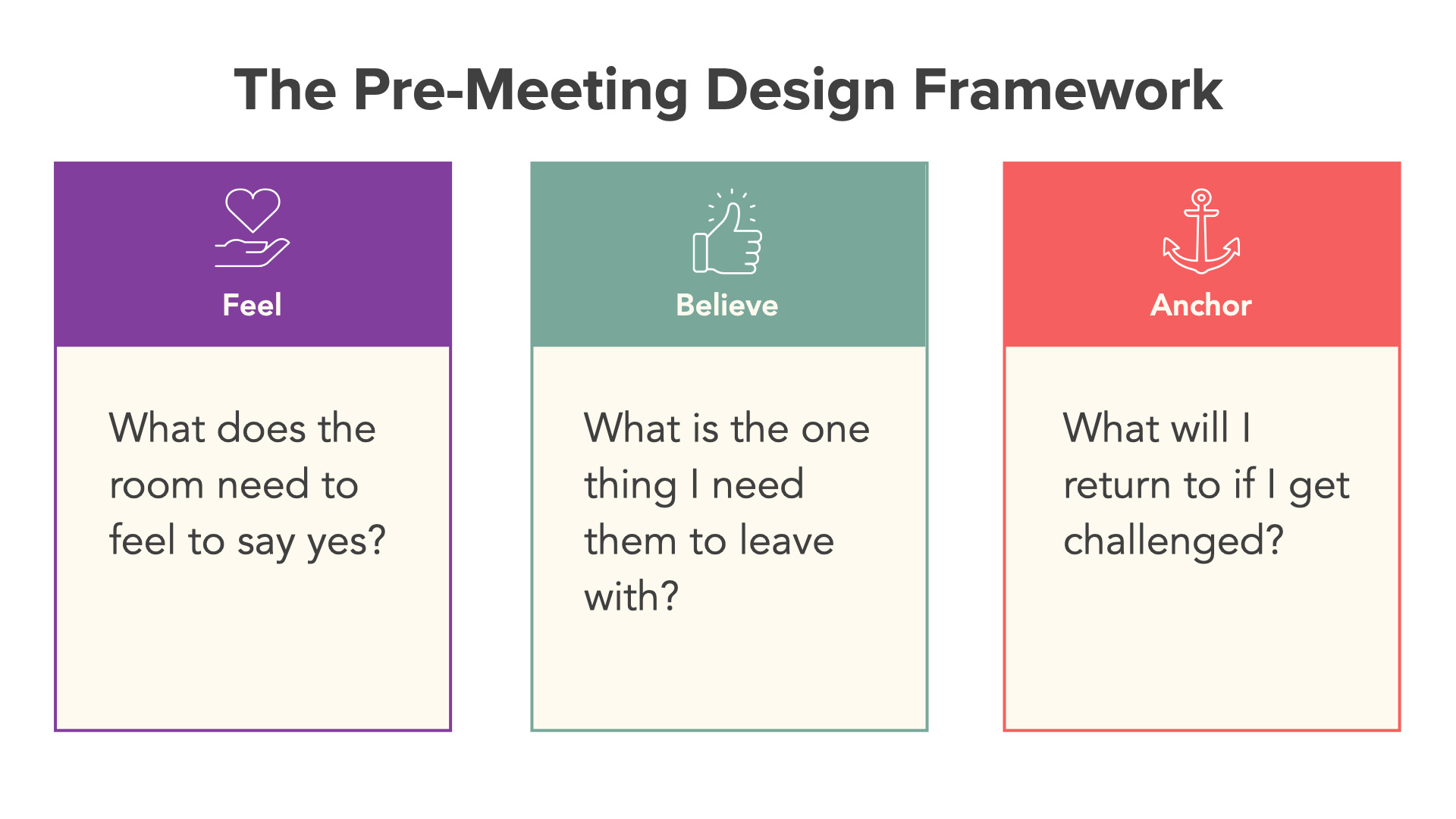
The meeting replay almost always happens because three things weren’t decided before you walked in, and for many of us, this is the part no one ever explicitly teaches.
What the room needs to feel, not just know. Safe. Aligned. Confident in the direction. When our brains are busy tracking every reaction and managing every input in real time, it helps to have already answered this question before you’re in it. What emotional state does the room need to be in to say yes, and what’s your part in creating that?
The one thing you need them to leave believing. Not five things. Not ten. One. Everything else is context, colour, supporting evidence. If you can’t name that one thing before you walk in, it becomes very hard to land it once you’re in the room and the conversation starts pulling in different directions.
How will you stay grounded if you get challenged? Do not reconstruct the whole argument under pressure; just know your anchor. That one clear belief you came in with. When things get messy or someone pushes back hard, you don’t need to have every answer. You just need to find your way back to that.
When the preparation changed, everything changed
I remember coaching a VP of Engineering who had this experience after every steering committee meeting. He’s a brilliant thinker with deep expertise. But in the room, he came across as muddled, over-detailed, and reactive. At his desk afterwards, replaying the meeting, he was completely clear on exactly what he should have said and exactly how he should have said it.
The gap wasn’t intelligence. It was preparation of the wrong kind.
Once he started designing his communication before going in, not just his content, everything changed. The replay stopped. Not because he got faster on his feet. Because he got clearer before he walked through the door. The thinking was always there. He just stopped leaving its translation to chance.
One shift to make before your next meeting
So here’s the one shift to make before your next high-stakes meeting.
Write down one sentence: “The one thing I need this room to leave believing is...”
Complete it. Mean it. Then build everything else back from it. The data, the context, the caveats, all of it becomes supporting evidence for that one sentence. Lead with it, return to it when you get challenged and let it be the thing that stays in the room long after you’ve left.
This isn’t scripting. It’s anchoring.
And if part of you is thinking, “but I need to respond to what actually comes up, I can’t script everything,” I hear that.
You’re right. And this isn’t scripting. It’s anchoring. When the conversation goes off track, when someone challenges you, or the room shifts direction, you don’t need to rebuild from scratch. You just need to know what you’re trying to get back to. That’s the difference between feeling lost in a meeting and feeling grounded in one. Between the version of you in the room, and the version of you two hours later who had all the answers.
The meeting replay isn’t a confidence problem. It’s a preparation problem. The thinking is already there. What’s missing is the structure to get it out under pressure. One sentence before you walk in changes more than you’d expect.
If you want a practical method for turning your thinking into influence before, during, and after high-stakes conversations, the free CALM Leadership Masterclass is designed for exactly this.